
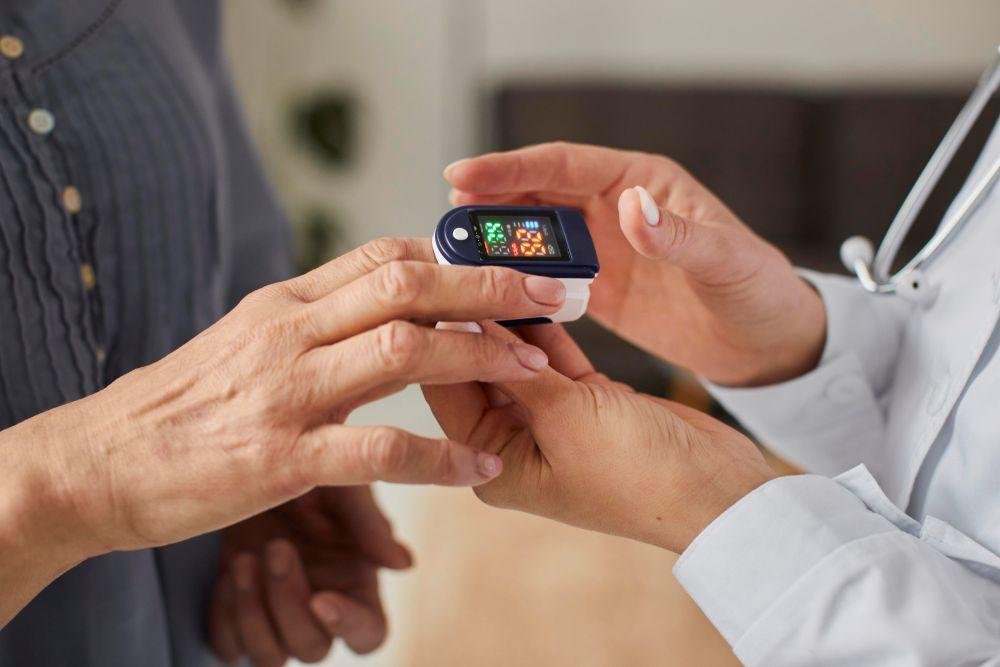
What Does SpO2 Stand For And Why You Should Be Tracking It?
Blood oxygen, or SpO2, is one of those metrics most people only encounter in a clinical setting. But wearable technology has changed the game.
With a smart ring like the Medfy-Ring, you can continuously monitor your SpO2 levels. By learning what your SpO2 means, you’ll get insights into how your body is functioning day to day and overnight.
What is the Meaning of SpO2?
SpO2 stands for peripheral oxygen saturation. It measures the percentage of haemoglobin in your blood that is currently carrying oxygen. For example, a reading of 98% means 98% of your haemoglobin molecules are bound to oxygen.
The measurement works through pulse oximetry:
- Optical sensors emit light at specific wavelengths through the skin and blood vessels
- Oxygenated and deoxygenated haemoglobin absorb those wavelengths differently
- The device reads that difference and converts it into a percentage
You may also encounter SaO2, which refers to arterial oxygen saturation measured through a blood draw. SpO2 is the non-invasive equivalent: no needles, no lab, no disruption to your day.
What Is a Normal SpO2 Level?
For most healthy adults, normal SpO2 levels fall between 95% and 100%. Within this range, blood is delivering oxygen efficiently to your organs and tissues.
Different thresholds can carry various implications:
- 95 to 100%: Normal. Oxygen delivery is functioning well.
- 91 to 94%: Mildly low. Worth monitoring, particularly if the reading persists.
- 90% and below: Considered low. Medical attention may be needed.
It’s worth noting that a single low reading doesn’t automatically signal a problem. What matters is the pattern. Readings that consistently fall below the healthy range warrant serious attention.
Why Tracking Blood Oxygen Levels Matters
Research found that fluctuations in oxygen saturation affect how effectively the body and brain function during everyday activities. Overnight, the stakes are just as real. Blood oxygen can drop during sleep without any obvious symptoms.
A study published on the National Institutes of Health found that nocturnal SpO2 dips are linked to disrupted sleep architecture and breathing irregularities. Without continuous monitoring, most people have no way of knowing this is happening.
With a clinical pulse oximeter, you get a single SpO2 reading at a time to learn if your blood oxygen levels have anything to do with your focus, energy or physical performance. Continuous monitoring with a smart ring builds something far more useful: health metric trends you can actually act on.
How Medfy-Ring Tracks Your SpO2 Around the Clock
Where a wearable health tracker sits on the body matters for accuracy. For instance, Medfy-Ring is worn on the finger, which has a higher density of arterioles and blood vessels near the surface. That proximity allows its optical sensors to produce more reliable readings than wrist-based devices typically achieve.
Monitoring also runs continuously through both day and night, with all data accessible through the Medfy app:
- Daily SpO2 readings for an at-a-glance overview
- Weekly and monthly trends to reveal longer-term patterns
- Blood oxygen data connected to sleep scores, stress levels and recovery insights for a fuller picture
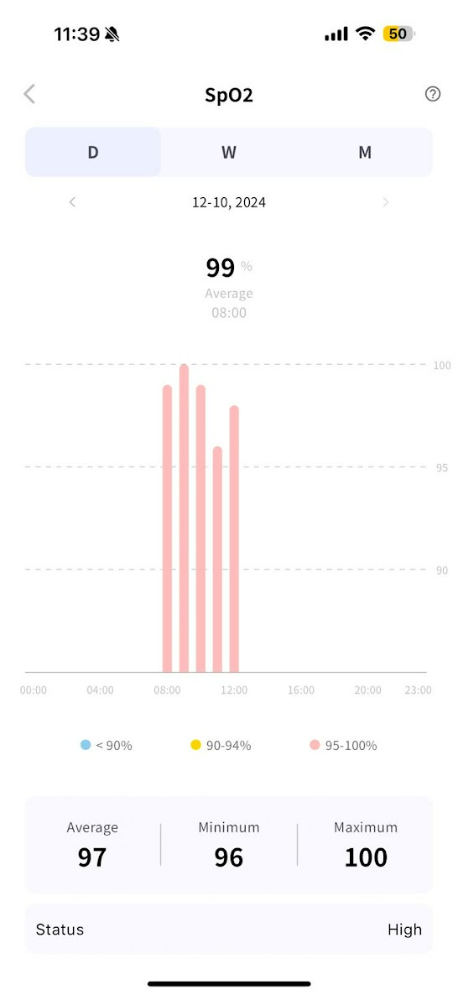
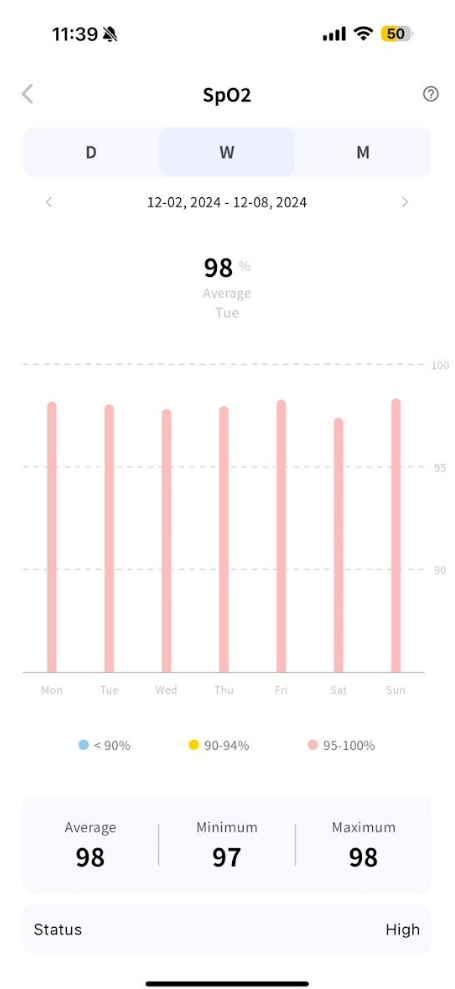
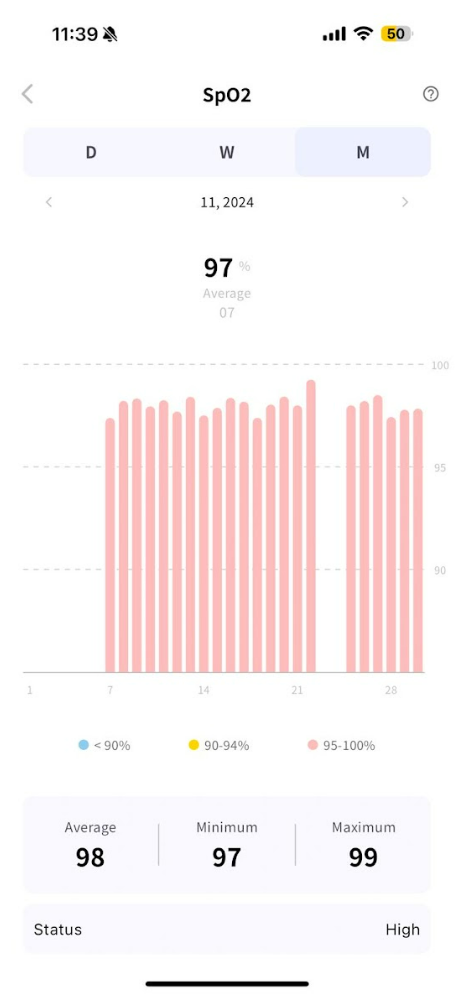
*Examples of the Medfy-Ring SpO2 tracking according to the day, week or month.
Those connections add real context. For example, a dip in overnight oxygen saturation, viewed alongside a low sleep score or slower-than-usual recovery, tells a more complete story than any single metric could on its own.
Consistent Tracking Turns a Simple Number Into Actionable Insight

Checking SpO2 once in a while gives you a snapshot. Tracking it continuously alongside sleep, heart rate, and stress data gives you the kind of pattern recognition that can inform daily decisions.
If you want effortless, around-the-clock health monitoring, the Medfy vitals tracking ring brings it all together in one place. Aside from monitoring your SpO2 levels, this device also functions as a heart rate monitor ring that tracks your heartbeats per minute and heart rate variability (HRV). What’s more, it gives you insights into your sleep quality and stress levels, allowing you to make adjustments to ensure overall wellbeing.
At just 2.5 to 3.5g, a smart ring this comfortable and light becomes part of your routine without you noticing it’s there. Explore the Medfy-Ring and start seeing what your body has been telling you all along.
Citations & References
- Rauniyar, S. Pujari & P. Shrestha. (2020) Study of Oxygen Saturation by Pulse Oximetry and Arterial Blood Gas in ICU Patients: A Descriptive Cross-sectional Study. https://pmc.ncbi.nlm.nih.gov/articles/PMC7654494/
- Cleveland Clinic. (n.d.) Blood Oxygen Level. https://my.clevelandclinic.org/health/diagnostics/22447-blood-oxygen-level
- Choi, D. Park, J. Yu, S. Ryu & J. Ha. (2016) The Severity of Sleep Disordered Breathing Induces Different Decrease in the Oxygen Saturation During Rapid Eye Movement and Non-Rapid Eye Movement Sleep. https://pmc.ncbi.nlm.nih.gov/articles/PMC5128354/