

Comfortable Smart Ring Design: Why Fit and Material Matter
A smartwatch that chafes during sleep. A fitness band that snags your sleeve. These are the friction points that turn good intentions into drawer-bound gadgets.
Smart rings are built around this problem. With no screen and no notifications, a well-designed ring works discreetly in the background, collecting data without demanding your attention.
But smart ring designs still vary significantly. Fit and material are what separate a ring you forget you’re wearing from one that keeps reminding you it’s there.
What Exactly Does a Smart Ring Do?
A smart ring is a compact wearable device worn on the finger that continuously tracks these key health and fitness metrics:
- Heart rate and heart rate variability (HRV)
- Sleep quality
- Blood oxygen or SpO2 levels
- Stress levels
- Daily movement
Unlike a smartwatch, it has no screen and sends no notifications. Instead, it collects data passively and syncs everything to a companion app for review.
The finger is also a particularly effective location for biometric sensing. Blood vessels sit close to the surface here, which allows a smart ring to produce more accurate readings than wrist-based devices.
Why Fit is More Than a Comfort Issue
For a fitness ring or health ring, fit is a functional requirement. After all, an ill-fitting ring compromises the accuracy of the data it is meant to collect.
Two fit problems account for most tracking errors:
- Too Loose: The smart ring shifts during movement and sleep, breaking sensor contact and producing unreliable readings.
- Too Tight: The ring causes discomfort during extended wear, particularly overnight, prompting users to remove it entirely.
Finger size can also fluctuate throughout the day, affected by temperature, hydration and physical activity. A well-designed ring accounts for this natural variation. Consistent wear is only realistic when the ring feels so natural that you forget it is there.
What Materials Make a Smart Ring Comfortable for All-Day Wear
Material choice affects three things: skin comfort, durability and long-term wearability. Additionally, the wrong material causes friction, traps sweat or triggers skin reactions, all of which shorten wearing time and compromise the data you collect.
These material properties can determine whether a smart ring can be worn comfortably:
- Hypoallergenic Inner Lining: Essential for all-day and overnight wear, particularly for users with sensitive skin.
- Smooth Inner Surface: Reduces friction and pressure points during sleep and physical activity.
- Lightweight Construction: A ring that is too heavy becomes noticeable quickly, and the ideal weight sits between 2.5g and 3.5g for a wear-and-forget experience.
- Scratch and Impact Resistance: Daily life involves bumps and knocks, and the outer surface needs to hold up without compromising the ring’s appearance over time.
The Role of Design in Continuous, Accurate Tracking
A smart ring that maintains consistent contact through movement and sleep produces data that reflects what is actually happening in the body. These design elements can determine how reliably a ring can maintain that contact:
- Thin Profile: A slim smart ring sits closer to the finger’s surface, reducing the distance between optical sensors and skin. More stable contact can also mean cleaner signals for heart rate, blood oxygen and HRV readings.
- Contoured Inner Surface: A profile shaped to follow your finger’s natural curve maintains contact along the full inner circumference rather than resting on isolated pressure points.
- Sensor Placement: Well-designed smart rings position optical sensors directly above the palmar artery, where blood vessel density is highest. Proximity to the capillary bed at the finger base also produces a stronger, more stable signal.
Which Smart Ring is Best for Comfort and Fit?
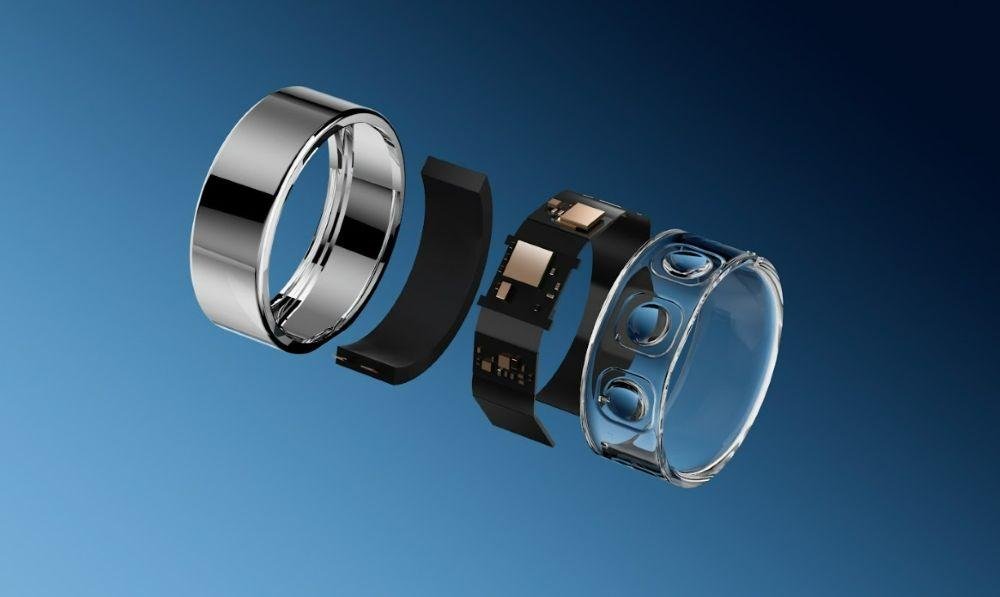
No single feature makes a smart ring comfortable enough for consistent daily wear. It takes the right combination of material, weight, fit process, and sensor placement working together.
Medfy-Ring, for example, is designed for 24/7 wear as both a health ring and fitness ring, and several of its design choices reflect this:
- Lightweight: Weighing between 2.5g and 3.5g, this smart ring stays on your finger without fatigue through workouts, long work days and overnight sleep.
- Hypoallergenic Inner Lining: The inner surface is designed for prolonged skin contact, reducing the risk of irritation during continuous wear.
- Contoured Profile: The ring’s inner shape follows the natural curve of the finger, maintaining consistent sensor contact through daily movement and rest.
- Free Sizing Kit: Medfy-Ring removes fit uncertainty before the ring ships, ensuring the right size arrives from day one rather than requiring a return.
- IP68 Waterproof Protection: The ring handles sweat, showers and daily wear without degrading comfort or sensor performance over time.
Get a Smart Ring that You Can Wear All Day and Night
The best smart ring is the one that’s comfortable enough to wear consistently. If you tend to remove the device during workouts, before sleeping or when performing certain tasks, you’d end up collecting incomplete data.
However, comfort enables continuous tracking, and continuous tracking ensures accurate data.
Whether you need a smart ring for daily activity tracking or a dedicated sleep tracking ring, Medfy-Ring is built to stay on your finger and do its job around the clock.
Explore how Medfy-Ring’s design, materials and free sizing kit work together for accurate, 24/7 health monitoring.
Citations & References
Gong, E. J., Bang, C. S., Lee, J. J., & Baik, G. H. (2025). Smart ring in Clinical Medicine: A Systematic review. Biomimetics, 10(12), 819. https://doi.org/10.3390/biomimetics10120819
Montenegro, M., Aliverti, A., & Angelucci, A. (2025). An adjustable smart ring to monitor pulse rate and peripheral blood oxygen saturation. Annals of Biomedical Engineering, 54(3), 885–897. https://doi.org/10.1007/s10439-025-03936-3